Early 1920s, after Hemingway and Hadley settle in Paris
A Poor Paris Home
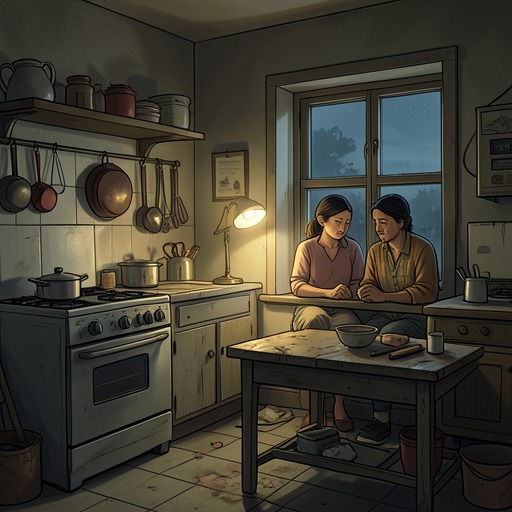
[Ernest Hemingway](entity:character-recall-character-ernest-hemingway-cb7a9866f33d) and [Hadley Richardson](entity:character-recall-character-hadley-richardson-e30697cc7266) make a home in a small flat on [Rue Cardinal Lemoine](entity:location-recall-location-rue-cardinal-lemoine-b245eee7cb0e), with little money, no hot water, and no indoor toilet. Their poverty is real, but they take pride in eating well, reading, and building a life together rather than measuring themselves by the comfort they lack.
Hemingway works at cafés and in a rented room high above the city, trying to earn enough from journalism while he learns to write fiction. The contrast between hardship and their sense of good fortune becomes one of the memoir’s governing tensions.
An early Paris autumn
The First Cold Rains
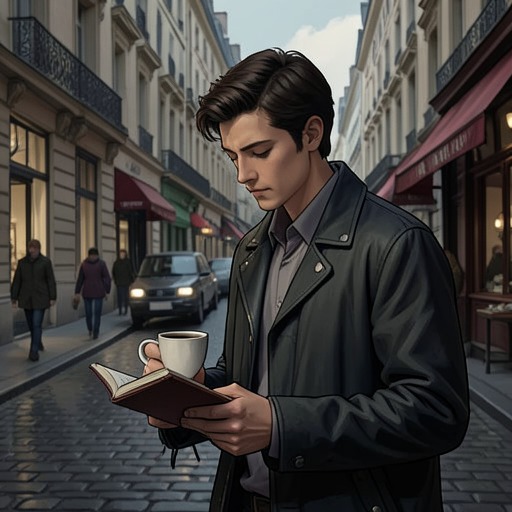
When autumn gives way to cold rain, Hemingway walks past the crowded [Café des Amateurs](entity:location-recall-location-caf-des-amateurs-b407c0dd1a53) and the sodden streets near [Place de la Contrescarpe](entity:location-recall-location-place-de-la-contresc-7f71f4231cb1). The smell and misery of the café, and the drabness brought on by the weather, make the city feel suddenly bleak.
He considers climbing to his cold workroom and spending money on fuel, then decides against it. Instead, he walks across [Paris](entity:location-recall-location-paris-c02b439ce220) toward a warm café near [Place Saint-Michel](entity:location-recall-location-place-saint-michel-5b1f4170d05a), carrying the day’s weather into the story he will write there.
That rainy autumn afternoon
The Girl at the Window
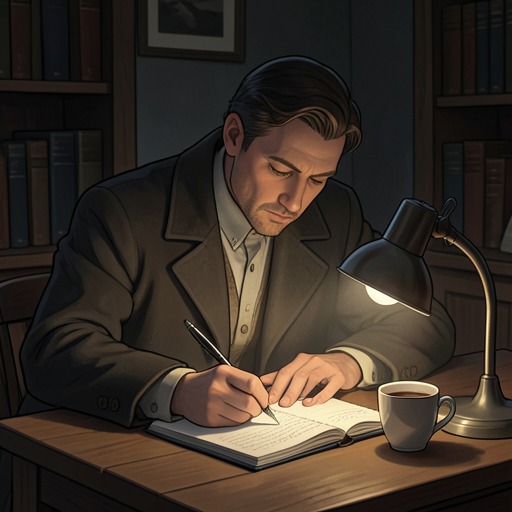
At the café near [Place Saint-Michel](entity:location-recall-location-place-saint-michel-5b1f4170d05a), Hemingway writes a story set in Michigan while a beautiful young woman waits alone by the window. She unsettles him, and he imagines that, simply by noticing her, he has made her part of his private world.
He becomes absorbed in the story and does not see when she leaves. After finishing, he eats oysters and drinks white wine, moving from the emptiness of completed work toward happiness and plans for the future.
Later that same rainy day
The Swiss Winter Plan
With winter settling over [Paris](entity:location-recall-location-paris-c02b439ce220), Hemingway decides that he and [Hadley](entity:character-recall-character-hadley-a2a05fba608c) should leave for a mountain chalet near [Les Avants](entity:location-recall-location-les-avants-d2f2b17f2ec0). He imagines snow among the pines, warm evenings, open windows, and time together with their books.
Hadley welcomes the idea and wants to go at once. Their decision turns the miserable weather into a reason for a shared adventure, and reflects how carefully they make even modest travel fit their finances.
After the stay near Les Avants
The Return to Paris
Hemingway and [Hadley](entity:character-recall-character-hadley-a2a05fba608c) return to a clear, cold [Paris](entity:location-recall-location-paris-c02b439ce220). The city’s winter light, bare trees, and freshly washed paths now feel beautiful rather than bleak, and the mountain journey has made the distances and hills seem easier.
Hemingway resumes work in his room above the roofs. He brings fruit and chestnuts to eat beside the fire, grateful for the warmth and for the renewed rhythm of working each day.
During the first winter after the mountain trip
One True Sentence
When a story will not begin, Hemingway tells himself to stop worrying and write the truest sentence he knows. Once that plain sentence is on the page, he can usually find his way into the work.
He also learns to cut away elaborate openings and ornament, and to stop each day while the story still has life in it. The methods become a discipline: make the writing simple and exact, then leave the work alone until the next morning.
During Hemingway’s winter writing routine
Learning from Cézanne
After a good morning’s work, Hemingway walks through [Jardin du Luxembourg](entity:location-recall-location-jardin-du-luxembourg-c7d54b8faf23) and visits [Musée du Luxembourg](entity:location-recall-location-mus-e-du-luxembourg-029cceb08ce1) to study the paintings, especially those of Cézanne. He senses that clear sentences alone will not give his stories the depth he wants.
The paintings offer a lesson he cannot yet explain. He keeps it private, taking in how art can create dimensions beyond direct description and carrying that problem back into his work.
After Hemingway returns from the mountains
The First Visits to Stein
Hemingway and [Hadley](entity:character-recall-character-hadley-a2a05fba608c) visit [Gertrude Stein](entity:character-recall-character-gertrude-stein-63ac62da7e47) at [27 rue de Fleurus](entity:location-recall-location-27-rue-de-fleurus-c13568127277). The studio feels like a warm, comfortable museum, filled with major paintings and generous food and drink; Stein and her companion welcome the young couple as promising children.
Hemingway is drawn to the art and conversation, even though he senses that the wives are treated as secondary. The visits begin an important friendship and introduce him to the literary and artistic circle around Stein.
During an early visit to the Hemingway flat
The Inaccrochable Story
Stein reads Hemingway’s story “Up in Michigan” and says that it is good, but cannot be hung or sold because it is inaccrochable. Hemingway argues that he has used the words people would actually use, because those words make the story true.
Stein insists that he should not write work that publishers and readers cannot accept. Hemingway does not persuade her, but he recognizes that the disagreement belongs to his own artistic decisions, not to a debate he needs to win.
During the same early period of friendship
Stein’s Advice on Pictures
Stein tells Hemingway that a person without great wealth must choose between spending on clothes and buying pictures. She advises him to dress for comfort and durability, then use the savings to purchase work by painters of his own generation.
Hemingway protests that even such economies would not put Picasso within his reach. Stein replies that he should seek serious artists he can afford, while teasing him that women’s clothing is the more expensive obstacle.
A later winter afternoon at 27 rue de Fleurus
The Conversation About Sex
Stein tells Hemingway that he knows too little about homosexuality and offers a sweeping distinction between men and women. Hemingway responds with memories of dangerous encounters and with examples of people whose conduct he finds cruel or predatory.
The exchange exposes their contrasting judgments and the limits of Stein’s confidence in her own explanations. Hemingway leaves unsettled, then tells [Hadley](entity:character-recall-character-hadley-a2a05fba608c) what he has heard; the couple find comfort in their own understanding of each other.
Early in Hemingway’s Paris years
A Library Without a Deposit
Short of money for books, Hemingway goes to [Shakespeare and Company](entity:location-recall-location-shakespeare-and-comp-5e9476ce749b), [Sylvia Beach](entity:character-recall-character-sylvia-beach-adcdd2042bcc)’s bookshop and lending library. He admits he cannot pay the membership deposit, but Beach gives him a card and lets him borrow books anyway.
He leaves with Russian and English books, surprised by her trust and kindness. The library gives him access to a literary education that his finances would otherwise have denied him.
After Hemingway joins the lending library
Books for the Long Winter
Hemingway borrows major works by Turgenev, Tolstoy, and Dostoyevsky, and later reads Chekhov and other writers. Books become companions in the mountains as well as in [Paris](entity:location-recall-location-paris-c02b439ce220), opening what he describes as a new world of landscapes, people, and moral complexity.
The encounter with Russian literature changes his standards and ambitions. He admires writing that makes human beings and their circumstances vivid, even when the prose itself seems imperfect to him.
During the years Hemingway and Stein remain close
Evenings with Stein
Hemingway often stops at [27 rue de Fleurus](entity:location-recall-location-27-rue-de-fleurus-c13568127277) after work, where Stein talks about painters, people, and her own writing. She shows him the great quantity of manuscript she produces each day and values publication and recognition as well as the act of writing.
Hemingway admires her insights into rhythm and repetition but sees her resistance to revision as a weakness. Their friendship is affectionate and intellectually stimulating, yet shaped by Stein’s desire for literary acceptance.
During Hemingway’s early Paris years
Walking the Seine
After work, Hemingway walks along the quais and watches the fishermen, boats, and changing currents of the [Seine](entity:location-recall-location-1c99276eafb3). He learns how the men fish and sometimes buys wine, bread, and sausage to eat in the sun while he watches them.
He does not take up fishing himself, preferring to save his money and avoid becoming tied to the sport. The river nevertheless becomes a place of companionship and thought, a living part of the city rather than a backdrop.
A spring morning in the rue Cardinal Lemoine flat
The Spring Goat Herd
Hemingway wakes early to work while [Hadley](entity:character-recall-character-hadley-a2a05fba608c) sleeps and watches a goatherd bring his herd up the street. A neighbor buys fresh milk, and the ordinary scene gives the morning a vivid, almost pastoral life.
Hemingway goes out for a racing paper and discovers that horses are running at Enghien. The possibility of a day at the races takes shape as he hurries home to finish his work.
That spring racing day
The Winning Long Shots
Hemingway and [Hadley](entity:character-recall-character-hadley-a2a05fba608c) take a cheap train to Enghien and spend the day studying the horses. A friend from the racing world gives Hemingway two choices, and both win at long odds, bringing the couple an unusual amount of money.
They divide the winnings between spending and a separate racing fund. For a moment, the spring seems to offer everything they need, but the success also encourages a gambling habit that will later consume more time than they can spare.
Later in the same spring
Memory as Hunger
After a successful day at the races, Hemingway and [Hadley](entity:character-recall-character-hadley-a2a05fba608c) walk through [Paris](entity:location-recall-location-paris-c02b439ce220) and recall trips with [Chink](entity:character-recall-character-chink-0a3aa225bd4a), including mountain journeys, fishing, and meals shared with their friend. Hadley remembers the conversations and details as part of a life the three of them made together.
On a bridge over the river, she tells Hemingway that memory is a kind of hunger. Even after they eat at [Michaud’s](entity:location-recall-location-michaud-s-467180072655), the feeling remains: happiness and abundance cannot erase longing for what has passed.
Over the following racing seasons
The Gambling Habit
Hemingway returns to the races after work and becomes increasingly involved in handicapping. He studies horses, trainers, jockeys, odds, and the changing behavior of the courses, especially at [Hippodrome d’Auteuil](entity:location-recall-location-hippodrome-d-auteuil-e282e2108e4e) and Enghien.
What began as an occasional pleasure becomes nearly a full-time occupation, and he recognizes that careful study will not reliably make money. The excitement and knowledge draw him deeper even as they compete with the work he needs to do as a writer.
After several seasons of racing
Giving Up the Track
Hemingway finally stops working the races. He is relieved to be free of the demands of the track, though the decision leaves an emptiness that he understands as the cost of giving up something that had mattered to him.
He deposits the separate racing money and meets his friend Mike Ward for lunch. Ward explains that anything requiring a bet in order to be exciting is not worth watching, and recommends bicycle racing as a sport Hemingway can enjoy without gambling.
During a trip from Paris to Lausanne
The Lost Manuscripts
[Hadley](entity:character-recall-character-hadley-a2a05fba608c) packs Hemingway’s manuscripts, including originals, typescripts, and carbons, into a suitcase to surprise him in [Lausanne](entity:location-recall-location-lausanne-20fc9ef0ab34). At the Gare de [Lyon](entity:location-recall-location-lyon-1a930ca08d16), the suitcase is stolen, destroying almost all of the work he has completed to that point.
Hadley is devastated and struggles to tell him what happened. Hemingway returns to [Paris](entity:location-recall-location-paris-c02b439ce220) after learning the truth, tries to comfort her, and resolves that he will write again, though the loss marks a severe break in his early career.
After the manuscript theft, at Cortina d’Ampezzo
The First Story After Loss
Hemingway begins writing again at [Cortina d’Ampezzo](entity:location-recall-location-cortina-d-ampezzo-63eb0632285f), producing “Out of Season,” a story about a fishing trip. He leaves out the actual ending, in which an old man hangs himself, testing the idea that what a writer knowingly omits can deepen the story.
The work restores his confidence that he can continue after the manuscripts are gone. He decides that longer stories will help him prepare for a novel, but refuses to begin one merely because he needs money or believes it is expected of him.
After Hemingway gives up journalism
Hunger at the Museum
With no steady newspaper income and few story sales, Hemingway sometimes skips lunch and walks through the Luxembourg gardens to avoid food. He finds that hunger sharpens his perception of the paintings at [Musée du Luxembourg](entity:location-recall-location-mus-e-du-luxembourg-029cceb08ce1), especially those by Cézanne.
He treats the effect as both useful and dangerous: hunger can train attention, but it can also turn into self-deception. The experience links his physical poverty to the discipline and heightened observation he seeks in writing.
One hungry afternoon after a visit to Shakespeare and Company
A Meal at Lipp’s
At [Shakespeare and Company](entity:location-recall-location-shakespeare-and-comp-5e9476ce749b), [Sylvia Beach](entity:character-recall-character-sylvia-beach-adcdd2042bcc) notices that Hemingway is too thin and asks whether he is eating. He admits that he has missed lunch, then feels ashamed of complaining about the hardship he chose when he gave up journalism.
He goes to [Lipp's](entity:location-recall-location-lipp-s-05ba54c36fca) and slowly eats potatoes, sausage, bread, and beer. As he eats, he recalls the stolen manuscripts and the first story he managed to write afterward, turning the meal into a reckoning with poverty, ambition, and persistence.
Later that same afternoon
A New Story in the Café
After eating, Hemingway walks to the [Closerie des Lilas](entity:location-recall-location-closerie-des-lilas-c33a15103e87) and begins a story about a river and a return from war. The story contains no direct mention of the war, and he concentrates instead on making the river and the surrounding country real.
He knows that the work must continue the next morning, and that no other concern matters as much at that moment. The scene shows him rebuilding his craft through focused attention rather than through a return to the lost manuscripts.
An autumn evening during Hemingway’s years at the Closerie
Ford at the Lilas
[Ford Madox Ford](entity:character-recall-character-ford-madox-ford-42ccdf497014) comes out of the [Closerie des Lilas](entity:location-recall-location-closerie-des-lilas-c33a15103e87) and joins Hemingway at his table. He invites Hemingway and [Hadley](entity:character-recall-character-hadley-a2a05fba608c) to a dance hall Hemingway already knows from his earlier life on [Rue Cardinal Lemoine](entity:location-recall-location-rue-cardinal-lemoine-b245eee7cb0e).
Ford boasts that he has cut Hilaire Belloc, but Hemingway has barely noticed the encounter. Their conversation turns to the rules of gentlemen and social insults, revealing Ford’s self-importance and Hemingway’s amused skepticism.
During Hemingway’s early writing years at the Closerie
A Café Interruption
A young man enters the café while Hemingway is trying to write and complains that his own writing has failed him. Hemingway first tries to ignore him, then turns on him with deliberate cruelty, telling him to stop talking and to find another occupation.
The visitor accepts Hemingway’s suggestion that he become a critic, and the two drink together while he begins to judge Hemingway’s work as too stark and lean. Hemingway sees the exchange as a comic birth of a new critical voice, though the young man never becomes the celebrated critic Hemingway briefly imagines.
A spring evening when Hemingway is focused on work
Pascin at the Dome
After a productive day, Hemingway meets [Jules Pascin](entity:character-recall-character-jules-pascin-f36093ba942c) at [Le Dôme](entity:location-recall-location-le-d-me-b53994a00c6c) with two young models. Pascin is drunk but lucid, teasing the women and encouraging Hemingway to join their evening, while Hemingway insists that he must return to [Hadley](entity:character-recall-character-hadley-a2a05fba608c).
The scene reveals Pascin’s mixture of charm, sexual bravado, and artistic wit. Hemingway later remembers him from this lively night after learning that Pascin has died by suicide, preserving the painter in memory as he was before that end.
During Hemingway’s friendship with Ezra Pound
Boxing in Pound’s Studio
[Ezra Pound](entity:character-recall-character-ezra-pound-16ae211e9898) asks Hemingway to teach him to box, and the two spar in Pound’s studio. Hemingway tries to help him move and punch correctly while avoiding humiliating him in front of [Wyndham Lewis](entity:character-recall-character-wyndham-lewis-9a383102f502), who watches with apparent hope that Pound will be hurt.
Hemingway finds Lewis repellent and remembers his eyes as especially sinister. Later, [Gertrude Stein](entity:character-recall-character-gertrude-stein-63ac62da7e47) calls him the Measuring Worm, a phrase Hemingway considers kinder than his own first judgment.
Before T. S. Eliot receives the Dial award
The Bel Esprit Campaign
[Ezra Pound](entity:character-recall-character-ezra-pound-16ae211e9898) and Natalie Barney create [Bel Esprit](entity:organization-recall-organization-bel-esprit-1ea0d739ce12) to raise money so [T. S. Eliot](entity:character-recall-character-t-s-eliot-eaf798fa4041) can leave his bank job and write poetry. Hemingway supports the plan and energetically solicits contributions, treating its small Greek temple emblem as a test of whether people possess the proper spirit.
The project loses urgency after Eliot receives the Dial award and gains other support. Hemingway later admits that he spent money he had earmarked for the fund on betting at Enghien, a lapse that leaves him morally uneasy even though his wagers prospered.
After Hemingway returns from Canada
The Lost Generation Remark
At a garage, Stein’s young mechanic is reprimanded for not being serious about repairing her car. The garage owner calls him part of a lost generation, and Stein repeats the judgment to Hemingway, extending it to all the young people who served in the war.
Hemingway challenges her by asking whether the mechanic was drunk and by recalling the realities of wartime service. Walking home, he thinks about the dead and wounded, then decides that every generation is lost in some way while still feeling affection for Stein as a friend.
After years of friendship with Stein
Stein’s Friendship Unravels
Hemingway continues to help Stein with her long manuscript, including arranging its serialization and reading proofs. On a spring visit to say goodbye before her trip south, he hears Stein pleading with her companion in a private moment and leaves rather than intrude.
That encounter becomes, for Hemingway, the strange end of their friendship. He still performs small favors and later makes peace outwardly with Stein, but he says he can no longer restore the friendship in his heart or mind.
During Hemingway’s time in Pound’s studio circle
The Death Marked Poet
Hemingway meets [Ernest Walsh](entity:character-recall-character-ernest-walsh-461c1107e39f) in [Ezra Pound](entity:character-recall-character-ezra-pound-16ae211e9898)’s studio, where Walsh arrives with two wealthy young women and speaks intensely with Pound. Walsh later gains financial backing for a literary magazine and tells Hemingway that he will receive its large prize.
At lunch, Hemingway rejects the promised award as ethically improper, even as Walsh flatters him and appeals to their shared name. Hemingway remains courteous and later helps Walsh’s magazine through the printers, but he does not accept the prize Walsh had offered.
During an autumn in Hemingway’s Paris years
Shipman at the Lilas
[Evan Shipman](entity:character-recall-character-evan-shipman-1590df1188f6) waits for Hemingway at the [Closerie des Lilas](entity:location-recall-location-closerie-des-lilas-c33a15103e87) and talks with him about Dostoyevsky, whose novels they find powerful but difficult to reread. Their conversation moves from literature to the café’s new management, which plans to replace the familiar waiters and their mustaches with an American-style bar.
The next week, Hemingway sees the waiters in their new uniforms and learns that Shipman is helping one of them adjust to the change. Their friendship is grounded in work, books, horses, and a shared affection for the café’s ordinary people.
Shortly before Pound leaves Paris for Rapallo
The Opium Jar
[Ezra Pound](entity:character-recall-character-ezra-pound-16ae211e9898) asks Hemingway to keep a jar of opium and give it to [Ralph Cheever Dunning](entity:character-recall-character-ralph-cheever-dunni-41368a842bdd) only if Dunning truly needs it. Dunning, an opium-dependent poet who has neglected food, has previously been close to death before Pound helps arrange medical care.
When Dunning climbs onto a roof and refuses to come down, Hemingway carries the jar to him. Dunning throws it back at Hemingway and pelts him with milk bottles, so Hemingway retrieves the cracked jar and leaves without delivering it.
During Hemingway’s Paris years, before the Lyon trip
The First Meeting with Fitzgerald
[F. Scott Fitzgerald](entity:character-recall-character-f-scott-fitzgerald-9ae4aa1cf5e5) enters the [Dingo Bar](entity:location-recall-location-dingo-bar-94cae66f7368) with the pitcher Dunc Chaplin and praises Hemingway’s writing at length. Hemingway is embarrassed by the praise and studies Fitzgerald’s appearance while Fitzgerald drinks champagne and questions him about whether he and [Hadley](entity:character-recall-character-hadley-a2a05fba608c) slept together before marriage.
As Fitzgerald presses the intimate question, his face seems to tighten into a death mask. Chaplin assures Hemingway that Fitzgerald is all right, and Hemingway later discovers that Fitzgerald remembers the night differently, insisting that he merely left because of people he disliked.
A few days after Hemingway meets Fitzgerald
The Great Gatsby
Hemingway meets Fitzgerald again at the [Closerie des Lilas](entity:location-recall-location-closerie-des-lilas-c33a15103e87), where Fitzgerald is sober, charming, and eager to discuss writing. He describes how he alters stories to make them sell, while Hemingway argues that such compromises risk damaging a writer’s talent.
Fitzgerald lends Hemingway his last available copy of The Great Gatsby. Reading it changes Hemingway’s view of Fitzgerald: whatever his weaknesses, Fitzgerald has written a genuinely fine novel, and Hemingway commits himself to helping him if he can.
The next morning after Fitzgerald proposes the Lyon trip
The Missed Train
Hemingway arrives at the Gare de [Lyon](entity:location-recall-location-lyon-1a930ca08d16) expecting to travel with Fitzgerald, who is bringing the tickets, but Fitzgerald does not appear before the train leaves. Hemingway boards alone, buys a ticket, and sends word that he will wait for him in Lyon.
The delay begins a trip shaped by confusion and expense. Hemingway is angry at first, then decides to use the journey as a lesson in accepting an invitation and relying on another person.
The first evening Hemingway waits in Lyon
The Fire Eater
Unable to find Fitzgerald, Hemingway goes to a café and meets a fire eater who also bends coins with his jaws. The performer says there is little money in his trade and offers to tell Hemingway extraordinary stories in exchange for a fair share of any earnings.
They eat inexpensive food together, and the fire eater proposes a journey to North Africa in search of sensational material. Hemingway declines to make plans but remembers the man’s directness and the unexpected companionship of the evening.
The following morning
Fitzgerald Arrives in Lyon
Fitzgerald finally appears at Hemingway’s hotel, apologizing for the mix-up and explaining that he has searched the town for him. They eat a long hotel breakfast and arrange an elaborate picnic lunch, losing time before they even reach the car.
At the garage, Hemingway discovers that Fitzgerald’s Renault has no top and has been poorly maintained. The mechanic pleads with him to persuade Fitzgerald to take better care of the vehicle, foreshadowing the impractical decisions that will define their drive.
That day, driving north from Lyon
The Rainy Road
Rain repeatedly forces Hemingway and Fitzgerald to stop beneath trees or at roadside cafés. They share a fine meal and wine, but Fitzgerald begins to fear that he has caught a dangerous European illness and argues with Hemingway about the nature of pneumonia.
Fitzgerald’s anxieties grow as the day goes on, and Hemingway invents medical authority to reassure him. Their journey becomes less a practical drive than an exhausting exercise in managing Fitzgerald’s fears and the effects of alcohol.
That night in a provincial hotel
The Thermometer Test
Fitzgerald undresses and goes to bed convinced that he is dying of congestion of the lungs. He demands a thermometer and an express train to [Paris](entity:location-recall-location-paris-c02b439ce220), while Hemingway checks his pulse, observes that he has no fever, and tries to keep the situation calm.
When a bath thermometer is finally found, Hemingway takes Fitzgerald’s temperature under his arm and reports a normal reading. Fitzgerald accepts the result and says his great recuperative power has saved him, allowing Hemingway to recognize how completely anxiety and alcohol have distorted the evening.
Later that night in the same hotel
Fitzgerald’s Confession
After drinking more, Fitzgerald tells Hemingway about his life with Zelda, including a painful story about her falling in love with a French naval aviator at [Saint-Raphaël](entity:location-recall-location-ca7e6ffe2939). Hemingway listens closely and senses the sadness of the story, though he cannot reconcile it with the couple’s shared bed and married life.
Fitzgerald eventually passes out during dinner. Hemingway gets him to bed and spends the night thinking that alcohol affects Fitzgerald with unusual force, turning a companion who can be warm and articulate into someone overwhelmed and helpless.
The next day
The Drive Back to Paris
On the drive back, Fitzgerald is cheerful and talks at length about the plots of Michael Arlen’s books. Hemingway restricts the wine and tries to get them home safely, concluding that he has learned not to travel with someone he does not love.
Back in [Paris](entity:location-recall-location-paris-c02b439ce220), Hemingway reunites with [Hadley](entity:character-recall-character-hadley-a2a05fba608c) and tells her about the trip. Hadley calls Fitzgerald and others rich featherheads with no money, and the couple look ahead to their planned journey to [Spain](entity:location-recall-location-0fe76f866976).
Soon after the Lyon journey
The Lunch with Zelda
Fitzgerald invites Hemingway and [Hadley](entity:character-recall-character-hadley-a2a05fba608c) to lunch at the apartment he shares with Zelda and their daughter. Zelda has a hangover after a night of partying, and she is jealous of the closeness Fitzgerald and Hemingway formed during their trip.
Hemingway sees how Zelda’s drinking and restlessness unsettle Fitzgerald. He also notices how Fitzgerald’s resolve to work can be broken by repeated parties and marital conflict, a pattern that increasingly threatens his writing.
The late spring and summer after the Lyon trip
A Pattern of Disruption
Fitzgerald repeatedly tries to work, but Zelda’s boredom and the social life around them pull him back into drinking and late nights. He is jealous of her attention to other people, while she resents the time and energy he gives to writing.
Hemingway tries to encourage Fitzgerald to write his best work without shaping it to commercial formulas. Fitzgerald manages one strong story, “The Rich Boy,” but the cycle of work, parties, and failure continues.
Summer 1925
Spain and the First Draft
Hemingway and [Hadley](entity:character-recall-character-hadley-a2a05fba608c) travel to [Spain](entity:location-recall-location-0fe76f866976), visiting [Pamplona](entity:location-recall-location-pamplona-af6d7e105eb5) and later [Madrid](entity:location-recall-location-madrid-8acd4123f416) and [Valencia](entity:location-recall-location-valencia-85e24ae4c4f6). During the summer, Hemingway begins the first draft of a novel and completes it after returning to [Paris](entity:location-recall-location-paris-c02b439ce220) in September.
The work is a major step toward the book that will establish his reputation. Fitzgerald is not allowed to see the manuscript while Hemingway is still revising it, because Hemingway wants to preserve his own concentration and judgment.
Winter 1925–1926
The Winter in Schruns
Hemingway, [Hadley](entity:character-recall-character-hadley-a2a05fba608c), and their young son [Bumby](entity:character-recall-character-bumby-bf65b96b39c9) spend the winter in [Schruns](entity:location-recall-location-schruns-f0a2c6b253f0), where the family finds warmth, food, books, and a welcoming community at the [Hotel Taube](entity:location-recall-location-ff83a8e4c3df). Hemingway and Hadley ski with [Walther Lent](entity:character-recall-character-walther-lent-1d7deabac3b9), climbing into high country rather than relying on lifts.
The mountain life gives the family a season of shared physical effort and pleasure. It also provides Hemingway with the quiet and stamina required for the difficult rewriting that will turn his first draft into a novel.
Winter 1925–1926 in Schruns
Rewriting the Novel
Hemingway rewrites the first draft of The Sun Also Rises, which he had composed in a six-week burst. The revision is among the most difficult work he has done, and he gradually reshapes the manuscript into a finished novel.
He takes the work to [New York](entity:location-recall-location-75b9ea4bd176) and shows it to Max Perkins, then returns to [Schruns](entity:location-recall-location-schruns-f0a2c6b253f0) to complete the rewriting. Fitzgerald sees the manuscript only after the finished version has been sent to [Charles Scribner's Sons](entity:organization-recall-organization-charles-scribner-4a3634e75ef6).
A Christmas season during the Schruns years
The Lech Avalanche
After heavy snowfall settles over warm ground, [Walther Lent](entity:character-recall-character-walther-lent-1d7deabac3b9) warns German visitors not to ski in dangerous avalanche conditions at [Lech](entity:location-recall-location-4309d52688e6). They arrive anyway, dismiss his caution, and insist on going out; Lent finally leads them onto the safest slope he can find.
The hillside gives way as the skiers cross it. Thirteen people are dug out and nine are dead, and Hemingway and his companions become serious students of avalanches, learning how to avoid them and what to do if caught.
During the winters in Schruns
The High Mountain Life
Hemingway and his companions climb from the valley to [Alpine Club](entity:organization-recall-organization-alpine-club-1ca5e4ea28c1) huts, carrying supplies and learning the changing snow. They ski through forests, follow animal tracks, and eventually make a long glacier run that Hemingway considers more exhilarating than flying.
The season’s pleasure depends on training and effort: there is no lift to carry them upward, and the dangerous terrain demands judgment. Hemingway remembers this life as both a physical education and an innocent happiness soon to be disrupted.
During the last winter Hemingway spends in the mountains
The Rich Arrive
New wealthy acquaintances enter the circle around Hemingway and [Hadley](entity:character-recall-character-hadley-a2a05fba608c), brought by a friend who acts as a guide to the rich. They make each day feel like a festival and praise Hemingway’s work, encouraging him to read aloud from a manuscript he should have kept private.
Hemingway later sees how easily their charm overran a young couple who did not know how to protect their work or happiness. The episode becomes his harshest account of wealth as a force that consumes what it first appears to celebrate.
Before Hemingway leaves Schruns for New York
The New Woman in the House
An unmarried young woman becomes close to [Hadley](entity:character-recall-character-hadley-a2a05fba608c) and moves into the couple’s life. Hemingway understands only gradually that the arrangement may lead her to pursue him, and that his own feelings are becoming divided.
The situation initially seems stimulating and innocent, but it changes the household from a family of three into a more unstable arrangement. Hemingway compares the resulting lies and divided loyalties to living day by day in a war.
After Hemingway’s business trip to New York
The Delayed Return
Hemingway goes to [New York](entity:location-recall-location-75b9ea4bd176) to rearrange his publishing arrangements, intending to return quickly to [Hadley](entity:character-recall-character-hadley-a2a05fba608c) and [Bumby](entity:character-recall-character-bumby-bf65b96b39c9) in the mountains. Because the woman he has fallen in love with is in [Paris](entity:location-recall-location-paris-c02b439ce220), he delays taking the first, second, and third available trains back.
When he finally returns to the station in [Schruns](entity:location-recall-location-schruns-f0a2c6b253f0), Hadley greets him with affection and their son stands beside her. Hemingway is overcome by the knowledge that he has betrayed the person he loves and wishes he had never loved anyone else.
After Hemingway returns to Hadley in Schruns
The Last Happy Mountain Days
For a time, Hemingway and [Hadley](entity:character-recall-character-hadley-a2a05fba608c) recover a private happiness in the mountains. He works well, they make trips together, and he imagines that their marriage has become invulnerable again.
That confidence lasts only until they leave the mountains and return to [Paris](entity:location-recall-location-paris-c02b439ce220) in late spring. The other relationship resumes, ending the first part of their life in the city as Hemingway had known it.
Late spring after the final Schruns winter
The Affair Resumes
Back in [Paris](entity:location-recall-location-paris-c02b439ce220), the relationship Hemingway had tried to put aside begins again. [The rich](entity:concept-recall-concept-41a71fcf4848) acquaintances and their circle, which had already unsettled the couple’s life, are no longer a passing disturbance but part of a lasting change.
Hemingway describes this as the end of the first Paris: the city remains, but the life he and [Hadley](entity:character-recall-character-hadley-a2a05fba608c) had built there cannot return to its earlier shape. The memoir does not stage a final confrontation, but makes the changed marriage and lost innocence unmistakable.
Years after the early Paris friendship
Fitzgerald’s First Breakdown
After Zelda experiences what is then called her first nervous breakdown, Fitzgerald asks Hemingway to lunch and reveals that Zelda has told him his body makes it impossible for him to satisfy a woman. He has carried the accusation as a wound and asks Hemingway to tell him the truth.
Hemingway reassures him that there is nothing wrong, suggests that Zelda said it to undermine him, and takes him to the [Louvre](entity:location-recall-location-ab893fc37fa8) to look at statues. Fitzgerald remains doubtful, showing how deeply Zelda’s words have damaged his confidence.
Years after World War II
The Ritz Memory
At the [Ritz Hotel](entity:location-recall-location-ea9116a354ab), the bar chief Georges asks Hemingway who Fitzgerald was, since visitors keep asking about him. Georges remembers other figures from the past but cannot recall Fitzgerald, despite Hemingway’s belief that Fitzgerald spent time there.
Hemingway promises to write about Fitzgerald as he remembers him, hoping the account may restore the man to Georges’s memory. The exchange makes remembrance itself part of the story: the dead remain present differently to each person who knew them.
The memoir’s closing reflection
Paris Without an Ending
Hemingway concludes that there is never a single ending to [Paris](entity:location-recall-location-paris-c02b439ce220), because every person who has lived there carries a different city in memory. The place changes, as do the people who return to it, but its meaning remains available to those who have loved and worked there.
He remembers the early years as a time of poverty and happiness, when the city returned something for whatever its inhabitants brought to it. The closing image turns the memoir’s personal history into the idea that [Paris is a moveable feast](entity:expression-recall-expression-paris-is-a-moveabl-43db787bb0e3).